ENVIRONMENT STUDIES

Jingi Wallah!

( Hello, and welcome! )

Being a blak fella in

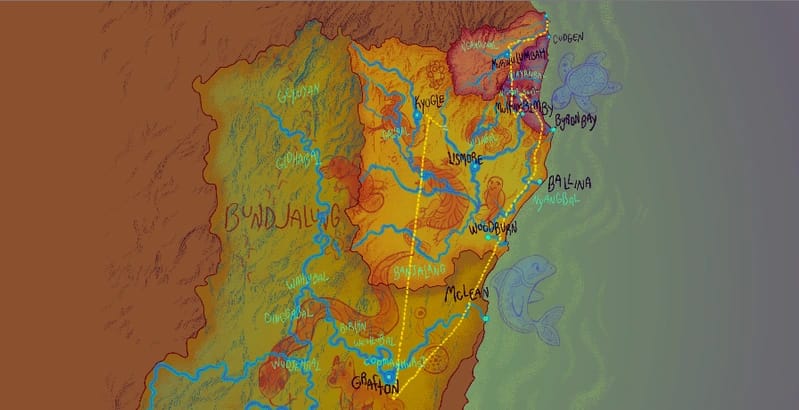
environmental conservation and science communication are central to my culture and day-to-day life, shaped by the sunny (and sometimes incredibly flooded) coastal rainforest of Bundjalung Country. The roots of my creativity and storytelling come from my relationship with Country, Culture, and—most importantly—Community.
acknowledgement of Country

Bundjalung Jugun

bundjalung country

NGALI NA JUGUN

We belong to Country

NGALI GARIMA MALA JUGUN

We look after this Country

WANA JANJMA MALA GUNU GALA JUGUN

Don’t do wrong around here in this Country

NGALI WANA JANJA MALA JUGUN

We don’t harm this Country here

NGALI NA MALA JUGUN

We belong to it, this Country

Works Timeline

Bundjalung Language Resources

2025

St Lawrence Wetlands Festival Project

2025

REFERENDUM COMIC

2023 / exhibition 2024

Flood documentry

2023

illustrations on Country

BundjaLung Jugan

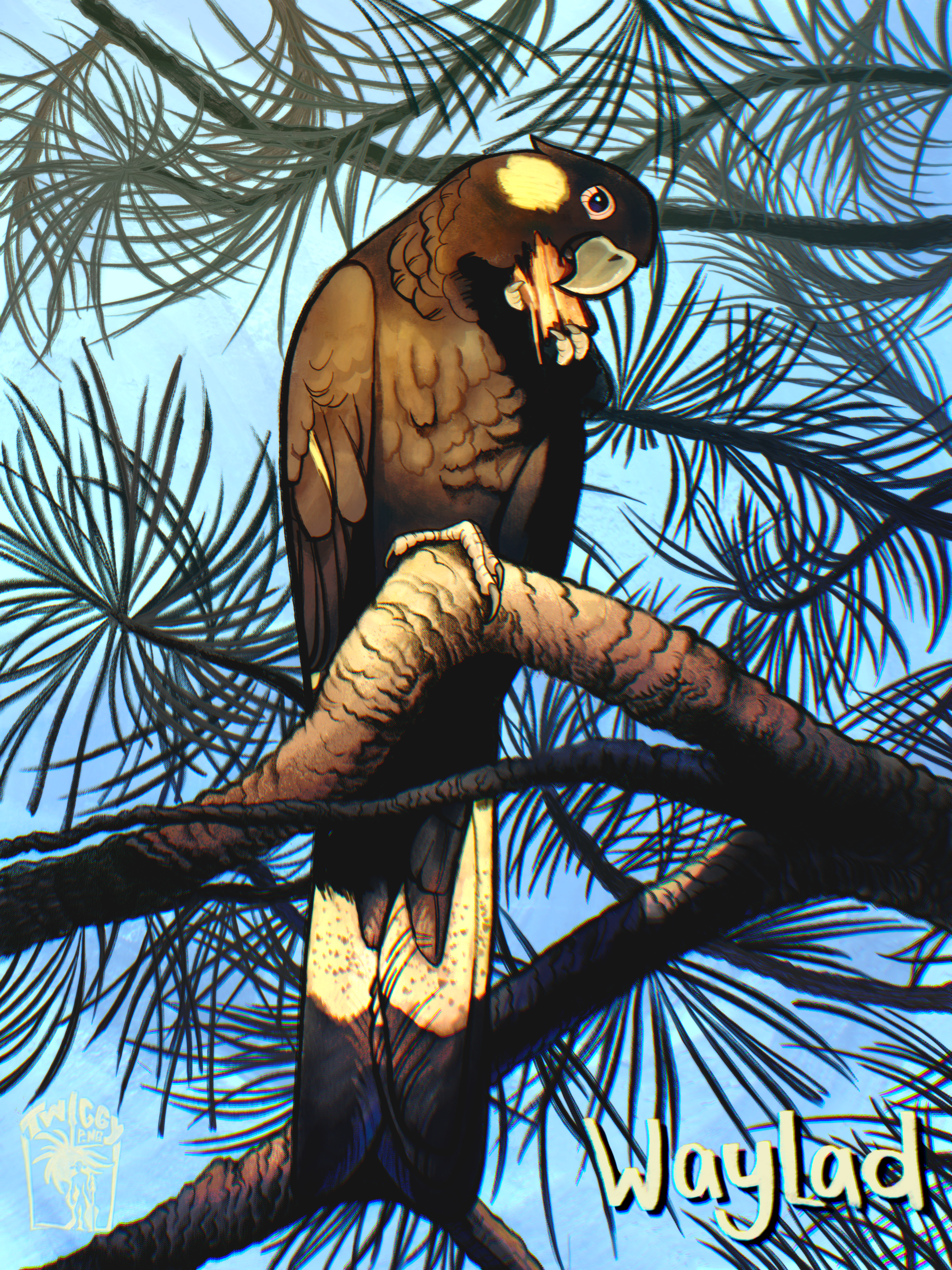
Illustration of Waylad (Calypterhynchus funereus), the black cockatoo named in Bundjalung language, perched in native tree branches.

Waylad - Calyptorhynchus funereus

Waylad holds a special place in my mobs hearts, I’ve grown up hearing their calls early in the morning to late in the evening. They are the sign of our hot and stormy season. I have watched their mob grow from only a handful to our most recent season, a large number of over 40+ Waylad flying directly over our house. we can only speculate how their numbers have changed so drastically over the years, All I can say for certain is country is healing with each new fledgling.

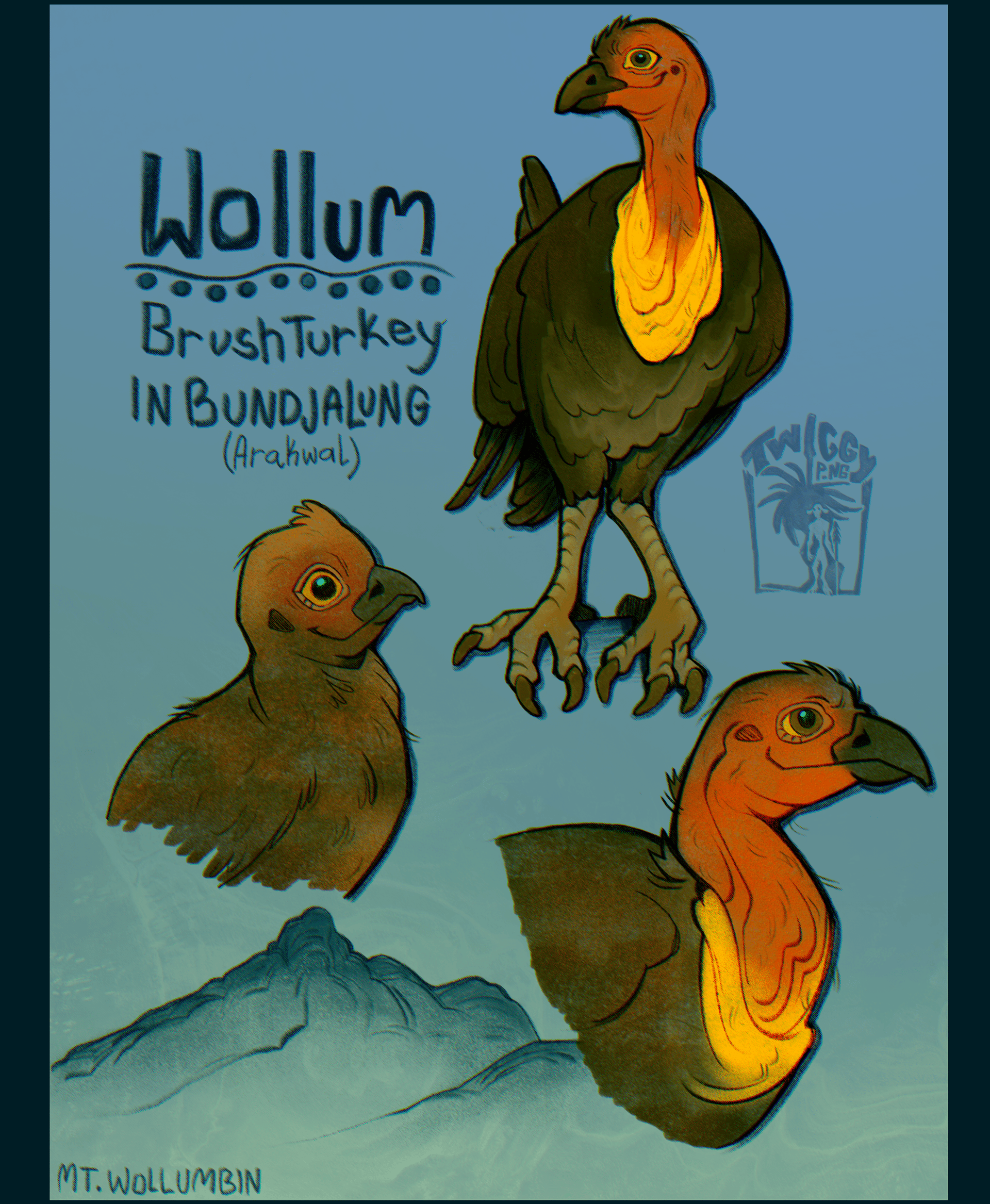
Illustrated Wollum (Alectura lathami), brush turkey named in Bundjalung (Arahwal), shown with Mt Wollumbin in the background.

Wollum - Alectura lathami

Living in the extinct 23 million year old shield super volcano, MT Wollumbin stands tall in the center, shielding us from deadly storms. Wollum is a great warrior, their ancestors roam the MT Wollumbin caldera building large leaf litter nests. Wollum is goofy little fellas, I just had to draw them.

FAQ

FAQ: Environmental Studies & Science Communication

What is featured in the Environmental Studies section?

It documents on-Country observations, wildlife illustration studies and science communication work shaped by life on Bundjalung Country.

What does “Ngali na Jugun” mean?

“Ngali na Jugun” means “We belong to Country.”

Why combine conservation and storytelling?

Storytelling can make ecological knowledge more accessible, helping people understand relationships between species, landscape and community.

What subjects do you study and illustrate?

Native plants, coastal birds and local wildlife are explored through sketch studies and illustrated works built from field references and research.

How does community shape the work?

Country, culture and community guide the themes and responsibilities of each project, keeping the work grounded and accountable.

Where can I see related projects and updates?

Check the site’s timeline and project pages for ongoing studies, illustrated works and collaborations.